If you are drawn to neighborhoods with real architectural presence, Monticello Park deserves a closer look. This historic San Antonio district offers more than attractive older homes. It gives you a layered story, distinctive streetscapes, and a setting that still feels connected to the city around it. Whether you are thinking about buying, selling, or simply learning the area, here is what makes Monticello Park stand out. Let’s dive in.
Monticello Park at a glance
Monticello Park is a historic district in northwest San Antonio, just north of the Woodlawn Lake Historic District. City and neighborhood sources trace the area back to a former dairy farm owned by George Calvert, with subdivision activity beginning in the 1920s.
What people now call Monticello Park actually brings together two original subdivisions. North Woodlawn Terrace was platted in 1925, and Monticello Park was platted between 1931 and 1943. That layered beginning helps explain why the neighborhood feels cohesive while still offering variety from block to block.
A neighborhood shaped by San Antonio history
Monticello Park developed during an important period of growth for San Antonio’s northwest side. Local planning history notes that the area became a hub for San Antonio’s Jewish community in the 1930s and 1940s and was known as the Silk Stocking District.
That same planning history adds another notable detail. Land that was once intended for a country club and golf resort hotel was eventually used for Thomas Jefferson High School, which remains one of the area’s best-known landmarks today.
Preservation also plays a major role in the neighborhood’s identity. According to city and neighborhood sources, local preservation efforts in the late 1970s led to the formation of the Monticello Park Neighborhood Association in 1983 and to historic district designation in 1995, with later additions to the district after that.
Architecture that gives the area character
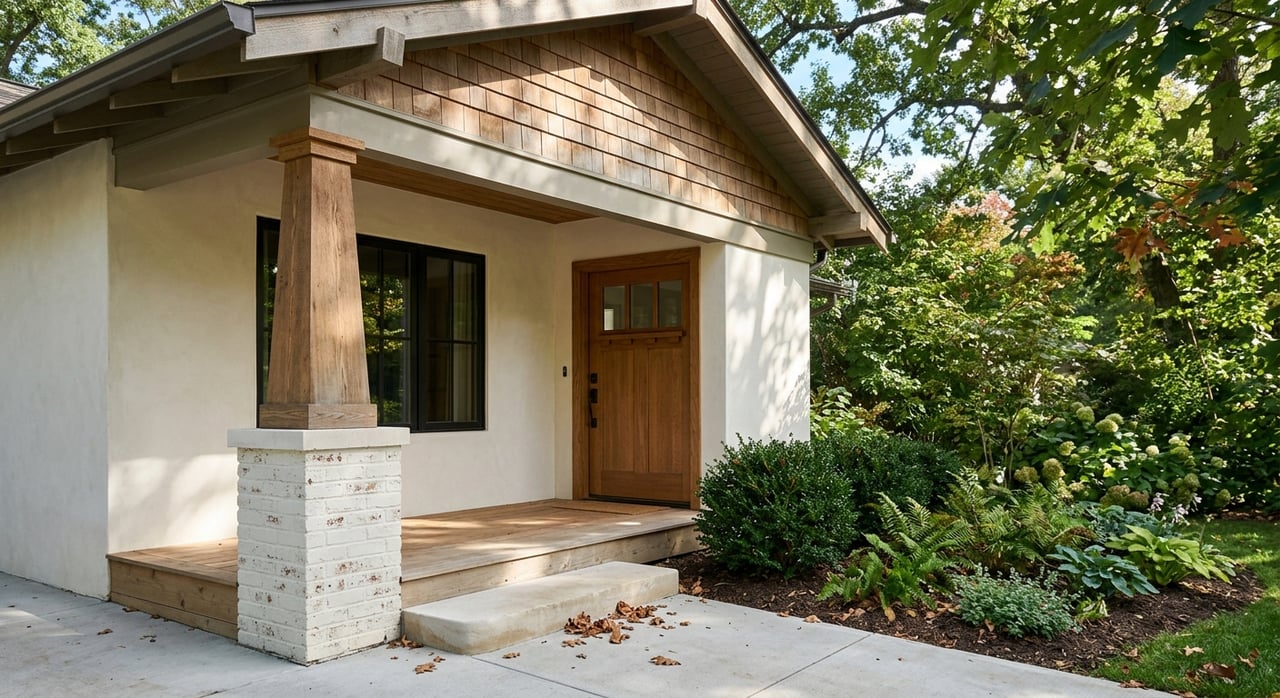
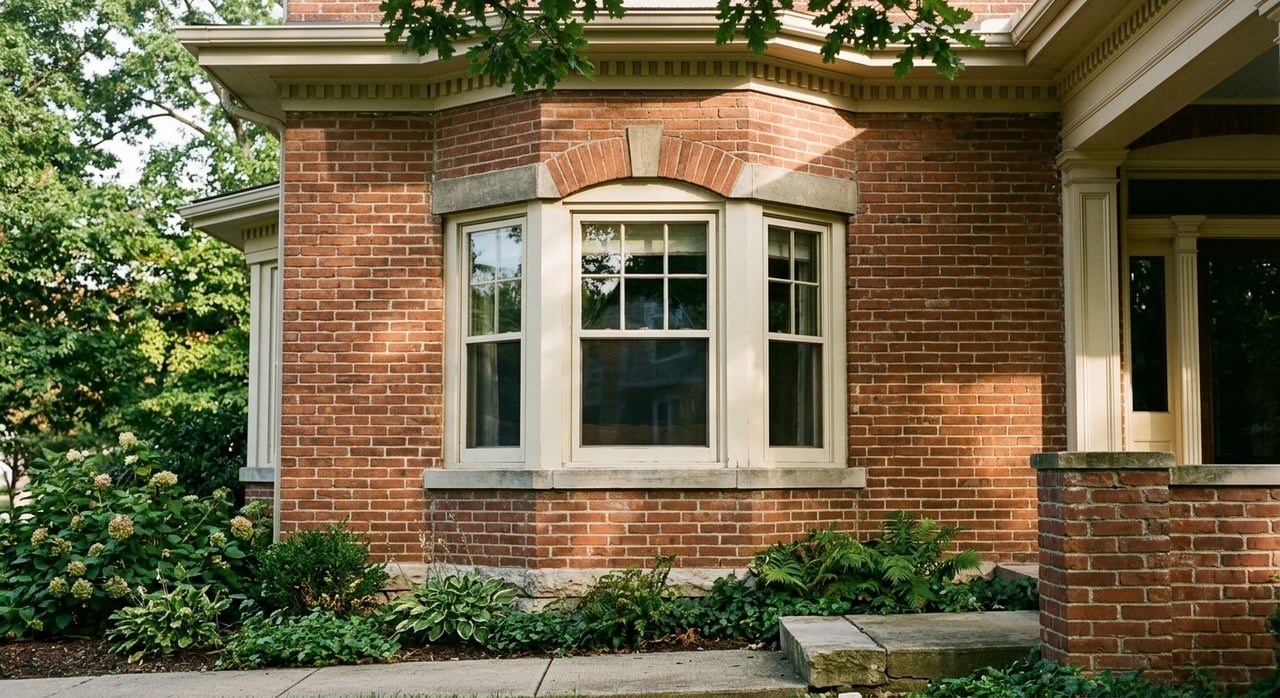
One of Monticello Park’s clearest draws is its architectural range. The City of San Antonio describes the district as an eclectic mix of styles that includes Art Moderne, Spanish Eclectic, Tudor Revival, Colonial Revival, and Monterey influences.
That variety matters if you are comparing historic neighborhoods. In some districts, the housing stock can feel visually consistent in a narrow way. In Monticello Park, the homes share a sense of historic substance, but the styles themselves are more varied and expressive.
Neighborhood history materials also point to several architects and firms associated with the area, including Adams & Adams, Ayres & Ayres, Frost Carvel, and Nathan Straus Nayfach. City sources note that Nayfach designed about 40 homes in the neighborhood, which adds to Monticello Park’s reputation as a district with architecturally meaningful homes.
Two early homes worth noting
A few early houses help illustrate that range. The neighborhood association identifies a 1925 English-style house on Furr Drive as the earliest known home in the original subdivision.
It also highlights a 1925 Cuban-style house at 402 Mary Louise Drive with original porch tiles, a barrel-tile roof, and decorative ironwork. Together, those examples show that Monticello Park’s historic character is not limited to a single look.
Streetscape and setting
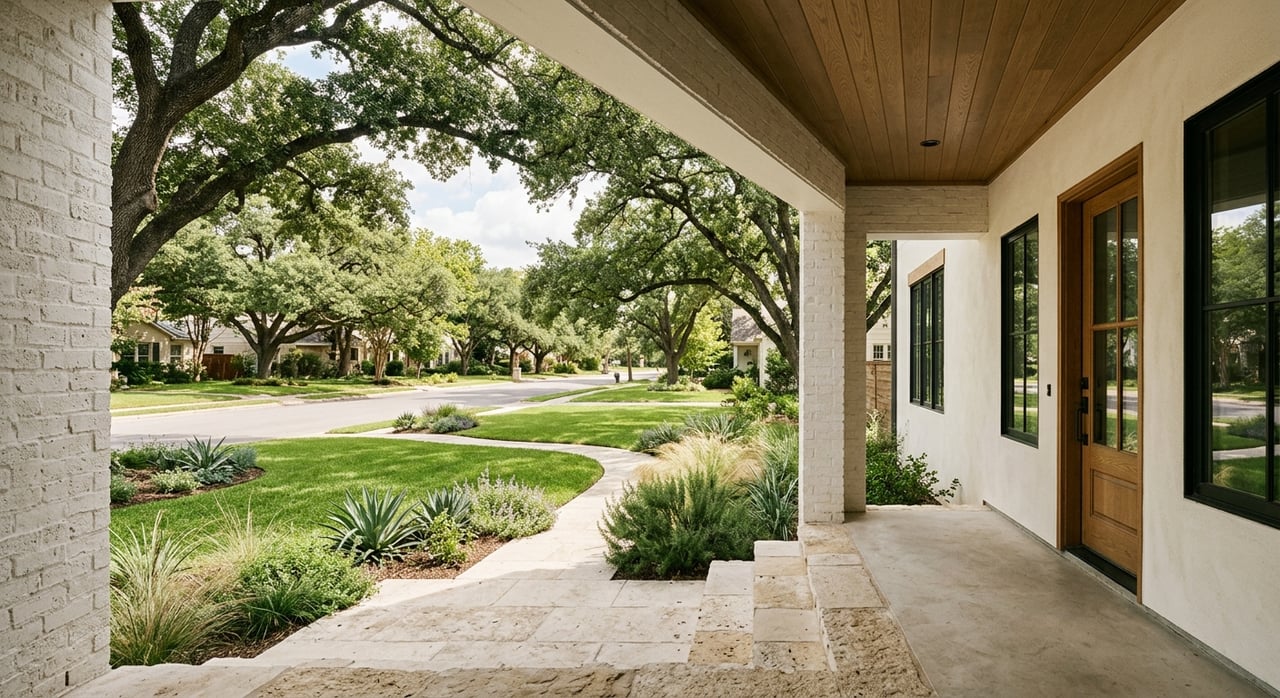
Monticello Park is not only about the homes themselves. The city’s historic-resources materials describe the district as visually unified by bermed lawns and consistently planted street trees.
That landscape pattern helps give the neighborhood its established feel. Even with a mix of architectural styles, the mature greenery and recurring streetscape features create a sense of continuity that many buyers notice right away.
Neighborhood sources also place the area around key corridors including Fredericksburg Road, Wilson Boulevard, Babcock Road, and Donaldson Avenue. Historically, Fredericksburg Road served as a major northwest route in the 1920s, which helps explain why the neighborhood feels residential while still being well connected.
Everyday livability in Monticello Park
For many buyers, charm only goes so far unless a neighborhood also works in day-to-day life. Monticello Park offers a practical balance. It reads as an established inner-loop neighborhood with mature landscaping, historic architecture, and immediate street-level character.
The neighborhood also includes a small city park at 444 Club Drive. According to the City of San Antonio, Monticello Park pocket park includes benches, a pavilion or gazebo, a walking trail, a water fountain, a Little Free Library, and posted hours from 5 a.m. to 11 p.m.
That is not the same as a major regional park, but it is a meaningful amenity. If you are comparing historic districts, small details like this can shape how a neighborhood feels on an ordinary weekday.
What buyers should know about the historic district
If you are considering buying in Monticello Park, it is important to understand what local historic designation means in practical terms. The district is locally designated by the City of San Antonio, and that means properties in the district are subject to the city’s Historic Design Guidelines.
The city also states that exterior work on historic-zoned properties generally requires a Certificate of Appropriateness. If work begins without one, it can lead to enforcement action.
That does not mean ownership becomes overly restrictive, but it does mean you should plan carefully before making exterior changes. If you love the idea of preserving character and being thoughtful about updates, this structure can be part of the appeal.
What designation does not automatically mean
The city is also clear about what historic designation does not do. It does not change how a property may be used, it does not automatically require a property to be restored to historic conditions, and it does not necessarily raise taxes.
For buyers, that distinction is helpful. You can appreciate the neighborhood’s architectural continuity without assuming every home comes with the same obligations people sometimes associate with historic areas.
The city also notes that qualifying substantial rehabilitation projects may be eligible for tax incentives. If that is relevant to your plans, it is worth reviewing current city guidance before starting a major project.
What sellers can highlight in Monticello Park
If you own a home in Monticello Park, the neighborhood itself is part of your property’s story. Buyers are often responding to more than square footage. They are noticing mature trees, established streets, historic detail, and the sense of continuity that comes from a protected district.
The City of San Antonio lists value retention, demolition protection, neighborhood pride, and revitalization among the advantages of local historic designation. The city also states that historically designated neighborhoods tend to retain value at a greater rate than non-designated neighborhoods, though that should be understood as a general pattern rather than a guarantee for any specific property.
For sellers, presentation matters here. Homes in architecturally significant neighborhoods benefit from thoughtful marketing that explains not just the house, but also the neighborhood context, design details, and preservation story behind it.
Why Monticello Park continues to appeal
Monticello Park stands out because it combines several qualities that are hard to replicate all at once. It has documented history, a meaningful range of architecture, mature landscaping, and a location that feels tied into the broader fabric of inner San Antonio.
It also offers something more subtle. The neighborhood feels curated by time rather than manufactured all at once. For buyers who value design, context, and the experience of a place, that difference is often what makes a historic district memorable.
If you are considering a move in one of San Antonio’s historic neighborhoods, having clear guidance matters. For a thoughtful, design-minded approach to buying or selling in areas like Monticello Park, connect with Ryan Hoskins.
FAQs
What is Monticello Park in San Antonio known for?
- Monticello Park is known for its historic district status, varied architecture, mature street trees, and roots as a northwest San Antonio neighborhood that developed from the 1920s forward.
What architectural styles can you find in Monticello Park?
- City sources describe styles in Monticello Park that include Art Moderne, Spanish Eclectic, Tudor Revival, Colonial Revival, and Monterey influences.
What should buyers know before purchasing in Monticello Park?
- Buyers should understand that Monticello Park is a locally designated historic district, and exterior work on historic-zoned properties generally requires city review through a Certificate of Appropriateness.
What does historic district designation mean for Monticello Park homeowners?
- According to the City of San Antonio, designation does not automatically change how a property may be used, does not automatically require full restoration to historic conditions, and does not necessarily raise taxes.
Is there a park in Monticello Park San Antonio?
- Yes. The City of San Antonio maintains a small pocket park at 444 Club Drive with benches, a pavilion or gazebo, a walking trail, a water fountain, and a Little Free Library.